
Mid-Drive vs. Hub Motor E-Bikes: Which Is Better for Speed, Torque & Real-World Performance?

HPC Performance Guide · 2026
Mid-Drive vs. Hub Motor E-Bikes: Which Is Better for Speed, Torque & Real-World Performance?
The motor system you choose shapes everything — your top speed, climbing power, reliability, and long-term cost. Here's what 17+ years of building America's most powerful e-bikes taught us.
If you're comparing electric bike motor systems in 2026, you've landed in the right place. The mid-drive vs. hub motor debate is one of the most searched questions in the e-bike world — and for good reason. The motor you choose fundamentally shapes your ride.
At Hi Power Cycles (HPC), we've spent over 17 years building high-performance electric bikes and conversion kits — from 1,000W street commuters to 10,000W downhill machines. We engineer both motor types at the absolute limit of what's possible, so this guide reflects real experience, not spec sheet speculation.
What Is a Mid-Drive Motor?

A mid-drive motor is mounted at the bike's bottom bracket — where the cranks meet the frame — and drives power through the chain and the bike's existing gearing system. This means the motor's output is multiplied or reduced depending on which gear you're in, just like your own pedaling effort.
✓ Advantages
- Leverages gears for efficient climbing — torque multiplies dramatically in low gears
- Better weight distribution — motor sits low and centered in the frame
- More natural pedaling feel, especially with torque sensing
- Lighter overall system weight (saves roughly 6–9 lbs vs. hub)
- Best suited for steep technical terrain and single-track
✗ Disadvantages
- More drivetrain wear — chain and cassette need more frequent replacement
- Noisier — chain, gears, and motor internals add mechanical sound
- More complex — drivetrain failures can leave you stranded
- Generally higher cost at equivalent power levels
What Is a Hub Motor?
A hub motor is built directly into the wheel hub — most commonly the rear wheel — and delivers power straight to the ground, completely independent of the drivetrain. At HPC, we specialize in gearless, direct-drive hub motors: no internal gears, no planetary systems. Just raw, silent, electric power.
✓ Advantages
- Totally silent — zero mechanical noise from gearless direct-drive
- Extremely reliable — fewer moving parts means less to go wrong
- Handles extreme wattage safely — capable of 5,000W, 8,000W, 10,000W+ builds
- No shifting required — simple, intuitive operation
- Works if the chain breaks — motor and drivetrain are independent
- Virtually maintenance-free over its lifetime
- Superior sustained top-end speed — direct-drive is king for high-speed builds
✗ Disadvantages
- Unsprung rear weight — can reduce suspension performance
- No gearing advantage on steep climbs at low speed
- Less efficient than mid-drive on technical hills
- Harder rear wheel removal for flat tires
Mid-Drive vs. Hub Motor: Head-to-Head
Here's how the two systems stack up across every performance dimension that matters to real riders.
| Category | Mid-Drive | Hub Motor |
|---|---|---|
| Torque (low speed) | ✅ Winner — gear multiplication | Fixed ratio only |
| Top Speed | Limited by gearing | ✅ Winner — direct drive excels |
| Climbing Efficiency | ✅ Winner | Higher power draw on steep grades |
| Noise Level | Mechanical chain & gear noise | ✅ Winner — near silent |
| Long-Term Reliability | More wear items | ✅ Winner — fewer moving parts |
| Max Power Potential | Limited by chain & drivetrain | ✅ Winner — handles extreme wattage |
| System Weight | ✅ Lighter overall | Heavier rear wheel |
| Maintenance Cost | Higher — drivetrain wears faster | ✅ Winner — virtually maintenance-free |
| Off-Road Performance | ✅ Winner — technical trail capable | Less effective on technical singletrack |
| Simplicity | More complex system | ✅ Winner — no shifting, no drivetrain |

Speed: Which Motor Type Is Actually Faster?
This is the question most riders care about most — and the answer is more nuanced than spec sheets suggest.
For top-end speed, hub motors win. A gearless direct-drive hub motor can sustain high speeds indefinitely without generating damaging heat the way a mid-drive does under extended high-RPM load. Our flagship HPC Revolution, powered by an up-to-9,000W gearless hub motor, reaches 60+ mph in off-road mode — something no mid-drive system can match safely at those power levels.
The HPC Revolution X pushes this further still, with a 10,000W hub motor capable of 70 mph — making it one of the fastest production electric bikes on the planet.
For acceleration from a stop, mid-drive has an edge. Gear multiplication at low speeds produces explosive torque off the line. But once a hub motor is up to speed, it's untouchable.
Torque: Who Wins for Raw Climbing Power?

Torque is the force that gets you up steep hills and out of technical situations — and this is where mid-drives traditionally dominate.
A mid-drive motor in a low gear effectively multiplies its torque through the cassette. A motor producing 80 Nm at the crank can deliver several times that to the rear wheel in a low gear. This is why mid-drives are the default choice for serious off-road and mountain applications.
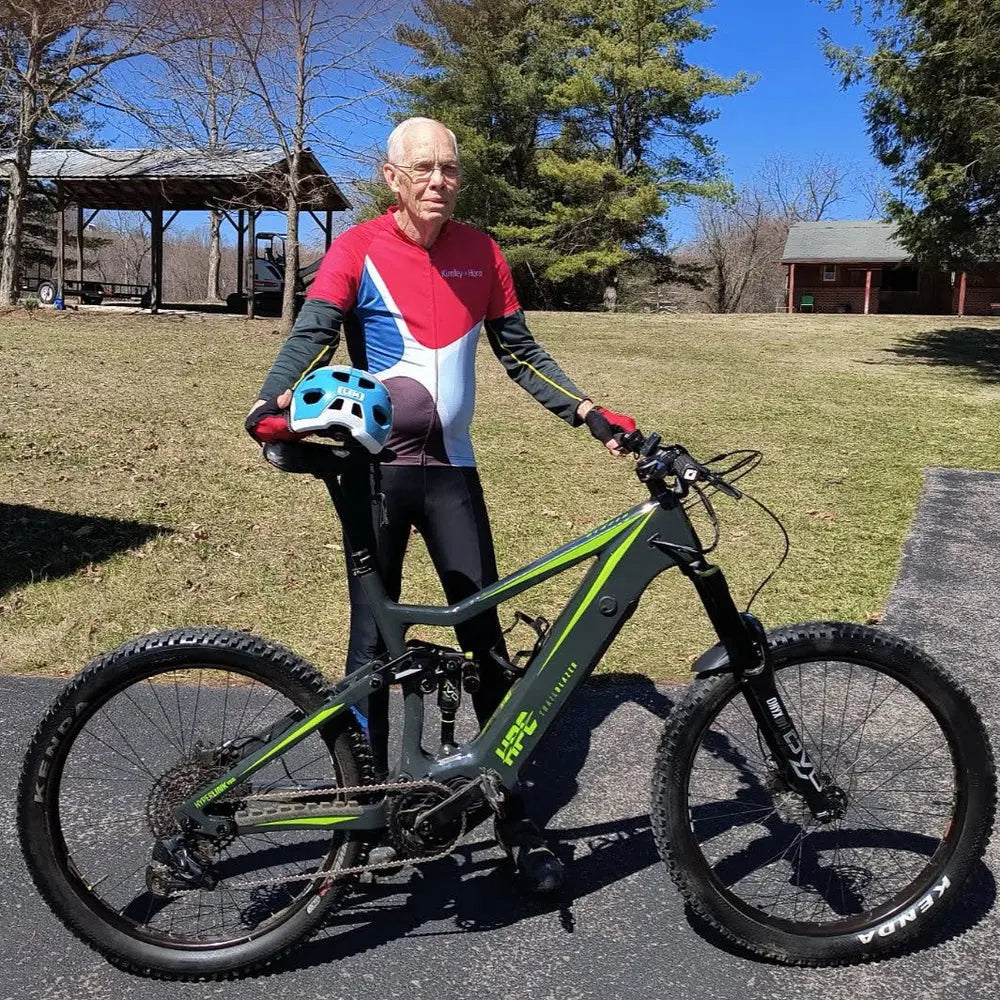
Our HPC Trailblazer runs a 2,000W mid-drive with up to 185 Nm of torque — more than double what most mainstream brands produce — with a triple sensor system (1 torque + 2 speed sensors) that reacts in milliseconds to your pedaling input. It's a climbing machine that feels like you've been given superhuman legs.
The Trailblazer Pro takes it further with a SRAM X0 T-Type wireless drivetrain, e*Thirteen Carbon Flux DH rims, and factory-tuned DVO suspension — the pinnacle of mid-drive enduro performance. For hub motors, torque at low speeds is the weak point — but at higher wattages, the gap narrows substantially.
Reliability: Which System Lasts Longer?
Hub motors have a clear and largely unchallenged advantage here. A gearless direct-drive hub motor has almost nothing to wear out — no brushes, no planetary gears, no belt — just a stator, a rotor, and electromagnetic force. Treated well, a quality hub motor can last decades.
Our custom hub motors handle up to 10,000 watts and are engineered for extreme-duty reliability. Mid-drive systems, by contrast, run mechanical load through the chain, cassette, chainring, and derailleur. At high power levels, chain wear accelerates significantly.
If you're building for long-term, low-maintenance performance — commuting, cargo riding, or high-mileage use — a hub motor is the more economical choice over the life of the bike.
Conversion Kits: Upgrade Your Existing Bike
One of the best things about both motor systems is that you can add either one to a bike you already own. HPC's conversion kits run from 1,000W all the way up to 5,000W, and are compatible with our USA-made battery systems. All kits can be configured for street-legal Class 2 compliance (750W / 20 mph) with the optional E-Bike computer.
Hub Motor Conversion Kit
Our highest-performance, lightest-weight kit. Paired with the best lithium battery on the market. Best for street speed and reliability.
Shop NowMid-Drive Conversion Kit
2,000W of mid-drive torque for power junkies who want maximum climbing ability from an existing bike.
Shop NowBrowse All Kits — 1,000W to 5,000W →
Complete Electric Bikes: The Best of Both Systems

Want a purpose-built machine rather than a conversion? HPC's complete electric bike lineup represents the pinnacle of both motor technologies — hand-assembled in the USA with an industry-leading 3-year warranty.
Best Mid-Drive E-Bikes from HPC
HPC Trailblazer
Up to 2,000W · 185 Nm torque · 40 mph · 1,050Wh USA battery · Full carbon frame · 160mm DVO suspension · 51 lbs
View TrailblazerHPC Trailblazer Pro
SRAM X0 T-Type wireless · DVO Onyx 38SL fork · e*Thirteen Carbon DH rims · Rockshox Reverb AXS dropper. No compromises.
View Trailblazer ProHPC Titan
750W–3,000W · Up to 80+ mile range · 40 mph · Fat tires · Torque sensor · USA-built. Perfect for hunters and adventurers.
View TitanBest Hub Motor E-Bikes from HPC
HPC Revolution
Up to 9,000W · 60+ mph · 100+ mile range · Schlumpf Drive · Magura MT5 quads · 9.5" rear travel · 3-year warranty
View RevolutionHPC Revolution X
Up to 10,000W · 70 mph · 150 lb/ft torque · 6061 + 7075 aluminum + carbon fiber frame · Magura MT7 quad pistons
View Revolution XWhich Motor Is Right for You?
After all the data, here's the fast-track decision guide based on how you actually ride:
Choose a Hub Motor if you…
- Prioritize top-end speed above all else
- Ride mostly on streets, paths, or moderate terrain
- Want near-zero lifetime maintenance
- Are building a high-power (3,000W+) performance system
- Value silence and simplicity of operation
Choose a Mid-Drive if you…
- Tackle steep hills and technical singletrack
- Want the most natural, gear-leveraged pedaling feel
- Need to save weight on your build
- Are building for serious off-road and enduro riding
- Prioritize explosive acceleration on varied terrain
Not sure? Our team has spent 17+ years helping riders find their perfect setup. Reach out here — we're happy to help you dial in your build.
Frequently Asked Questions
Is a mid-drive or hub motor better for hill climbing?
Mid-drive is generally better for steep, technical climbing because it uses the bike's gears to multiply torque. However, a high-powered hub motor (3,000W+) can overcome this disadvantage through sheer wattage on sustained grades.
Which motor type is more reliable?
Hub motors — especially gearless direct-drive designs — are significantly more reliable. They have fewer moving parts and almost nothing to wear out. Mid-drive systems require more frequent drivetrain maintenance, especially at high power levels.
Can I convert my existing bike to either system?
Yes. HPC offers hub motor kits and mid-drive kits from 1,000W to 5,000W that fit most standard bikes. All kits include USA-made battery systems and can be configured for street-legal Class 2 compliance.
What is the fastest e-bike motor type?
For sustained top speed, gearless hub motors win. The HPC Revolution X with a 10,000W hub motor reaches 70 mph off-road — more than any production mid-drive system can safely achieve.
Are mid-drive motors quieter than hub motors?
No — the opposite is true. Gearless hub motors are virtually silent because there are no mechanical components creating noise. Mid-drive systems produce mechanical sound from the chain, gears, and motor internals under load.
How much does an HPC electric bike cost?
HPC builds premium, USA-assembled electric bikes and conversion kits across a range of price points. Conversion kits start at lower price points for those upgrading existing bikes, while complete bikes like the Revolution and Trailblazer represent the pinnacle of performance e-bike engineering.
Ready to Find Your Perfect E-Bike?
17+ years of USA-built performance. Industry-leading 3-year warranty. Every bike assembled by hand.

Comments
Josh M. —
Love the new content guys! Been a follower for 10 years now!